Sunday, October 13, 2013

Game, Set, Blanch


If you’ve followed this column you know I’ve chronicled Handful O’Landfill-era sets for every major sport except one. Can you guess what sport?
That’s right: Caber tossing. So today we’re going to look at the Score CaberMasters set, featuring action portraits of superstar telephone-pole-tossers and haggis-eaters painted by noted sports artist Dick Perez.
Sorry. That didn’t happen, though probably not for lack of want-to. Lack of Scotsmen in the upper echelons of card-company management is to blame.[1]
Actually, the sport is tennis. I hadn’t planned on writing about tennis cards, but I was rummaging through a drawer looking for pictures of my loved ones to decorate my new digs and came upon not one but two tennis sets from the days of legwarmers and poofy hair. And you should have seen the women.

Before we get too far down this particular road to the landfill, let me say that tennis is my game. I have gladly given the game my shoulder and elbow and enough knee skin to make a nice mackintosh, and this noon I’m gonna give some more. I love tennis. I love smacking something round and fuzzy as hard as I can – in the context of the game – uh, tennis, I mean. It keeps me out of jail.

I even enjoy watching tennis, in a limited sense. I learn something every time I watch. Yesterday I learned that Andy Murray will never be any fun at all, even if you pumped him full of Yukon Jack and stuck him at the top of a bobsled run.

However, as much as I love playing tennis and enjoy watching tennis, I have never, ever smacked my forehead and said, “You know the one thing that’s missing from my total enjoyment of the game I love? Tennis cards! I wanna be able to trade two Jo-Wilfried Tsongas for a Mardy Fish and a Li Na rub-off!”[2]

While I may want as many pictures of Serena Williams as I can get my grimy hands on, I do not want them in a 2-1/2-by-3-1/2 format, unless you’re talking feet. Or meters.

Also, the ugly truth is that I am not exactly the target demographic for trading-card buyers, unless you’re pushing the Famous Caskets set, or the Clip Art Of Sixty-Somethings Dressed In White And Dancing On A Beach set. Then I’m right there.

Pressing on, leave us first examine the 49-card NetPro Legends set, from 1991. NetPro made a couple of tennis sets before the money ran out, then got pumped up again in the mid-2000s and is still out there selling tennis cards to the demi-masses. It’s either a money-making proposition or the greatest tax dodge since the United States Football League.

NetPro made serious tennis cards, which is better than making whimsical tennis cards, but only theoretically. If no one buys tennis cards, it wouldn’t matter if you made death-metal tennis cards. You’ll still sell the usual half-dozen sets.

The NetPro tennis set was not geared toward the rookie-chasing hot-card speculator. It features the first widely available card of Rod Laver, but on the So? Scale that’s only slightly above the fact that this set has the Anne Smith rookie. It’s asking a lot for Roddo to carry this set on his spindly legs.

Okay, there’s more than Laver to this set. There’s Arthur Ashe, who was half the tennis player Laver was but twice the cultural icon; John Newcombe, he of the droopy mustache and bottomless panache; Tracy Austin, the queen of tennis for all leg-warmer-wearing poofy-hairs everywhere; Billie Jean King without Bobby Riggs; and … and that’s about it. No McInroe, no Connors, no Chrissie Evert, no Bjorn Borg And His Hair, no Ivan Lendl And His Teeth, no Martina Navratilova, no Boris Becker – but, hey, here’s Roscoe Tanner!

You need to really be into tennis to get worked up over cards of Don Budge and Ellsworth Vines, so naturally I got worked up over them. But I was also gobsmacked by some of the players the set classifies as “legends.” The legendary Chuck McKinley? The legendary Sherwood Stewart?[3] The legendary Judy Dalton? Really?

If NetPro had really wanted to do a proper legends set, it would have included cards of the aforementioned Connors et al. plus Riggs, Bill Tilden, Jack Kramer, Helen Jacobs, Pancho Gonzales, Helen Wills Moody, Althea Gibson, Gottfried von Cramm, and Fred Perry – Tilden especially.

In fairness, a second 49-card legends series was planned, ostensibly with some of the aforementioned, though I have no memory of Series Two ever going live and neither does the NetPro website, where you can buy the legends set and other NetPro products from the archives/basement/court-appointed receiver. This just reinforces what I’ve said all along: If you’re going to make a tennis set, you gotta lead with Peaches Bartkowicz.

A shame about the second series, because these cards use every millimeter of poplar in service of the game. The pictures show tennis players playing tennis, and provide compelling visual evidence of the game’s evolution from long pants and small rackets to short pants and big(ger) rackets – if you’re into compelling visual evidence of short pants. Me, I prefer the blow on the head before bed.

The backs boil over with information, from playing style (outstanding; why didn’t more cards do this?) to career highlights to additional facts of interest. The card design is clunkier than a K-car with a busted U-joint (all K-cars, in other words), but at the same time it’s more sincere than Linus’ pumpkin patch. NetPro honestly wanted to make the world’s best tennis cards, and it was never swayed by the fact that the world really didn’t care.

If NetPro is Linus, all sincere and soulful, the Ace Fact Pack is Lucy – brash and loudmouthed and attractive in a love-it-or-hate-it way. (I always thought Lucy wasn’t that bad-looking. She just needed to mix up the wardrobe more. I mean, couldn’t she wear jeans just once?)

Let’s get the ugliness out of the way: These cards have playing-card backs.

Playing-card backs – honestly? Instead of running the quite-good pictures on one side and adding some more facts to the fairly-fact-filled backs (fronts?), Ace decided to treat the world’s greatest tennis players like a crazy-eights deck. The result is predictable. It’s uglier than a Chernobyl toad.

However, there is absolutely no quibble with the player selection. Every mid-‘80s player you would want to be in the set is there – McEnroe, Connors, Lendl, Becker, Navratilova, Wilander, Evert, Edberg, and Graf. (Borg had hung it up by then.) Pictures are solid, and every player has appropriate career highlights. The design is totally British -- no wasted space, no puffery, and unapologetically international. The only things missing are the crumbs from the sausage roll.

Still, there’s no getting around the playing-card backs. The one tennis-card set to have isn’t because you want to play pinochle with the flipping things.

I broke the seals on both these sets to write these columns. I hope the Gods of Collectibility will forgive me, because I don’t regret it. Like boxing cards, tennis cards were a noble effort in search of an audience. If card history teaches us anything, it’s this: It’s always best to have the audience first.

And always lead with Peaches Bartkowicz.


[1]  Upper Deck’s Richard McWilliam came closest, but he was from a region south of Scotland. South as the drill flies, through the earth’s crust.
[2] I never understood why they called them “rub-offs” when you’re clearly rubbing something on to something else. But what did we know. You could have stuck any preposition in there, called them “rub-next-tos” and we still would have rubbed them off onto the bathroom wall.
[3] Who I would have confused with Sherwood Schwartz, the producer of Gilligan’s Island, if I had known prior to today that there was such a person as Sherwood Stewart.

Saturday, September 28, 2013

Extremely Dumb And Incredibly Stupid, Part II


You know I’m not a fan of racing cards. They take the loudest, fastest, rudest, most spectacular sport this side of hurling and make it look like Sunday in the park with George.


Lots of things marginalized racing cards, especially the trend towards larger sets. Mainly, though, racing cards were a victim of the very thing that made other sports cards better through the ‘80s and ‘90s, namely: better photographs.


As cameras and lenses and film and computer color-correction improved, the quality of action photography on trading cards blew up. I sat in photographers’ wells at major stadiums with trading-card shooters like Brad Newton and saw how they’d leave a camera with a telephoto lens the size of a Jack LaLanne juicer focused on second base. When there was a play at second they wouldn’t even look away from their main camera. They’d just reach over to the second-base camera and hit the shutter. They didn’t have to focus or put their eye to the viewfinder or anything. They’d have a perfect play-at-second-base photo frozen like Ted Williams’ head, and it was effortless.

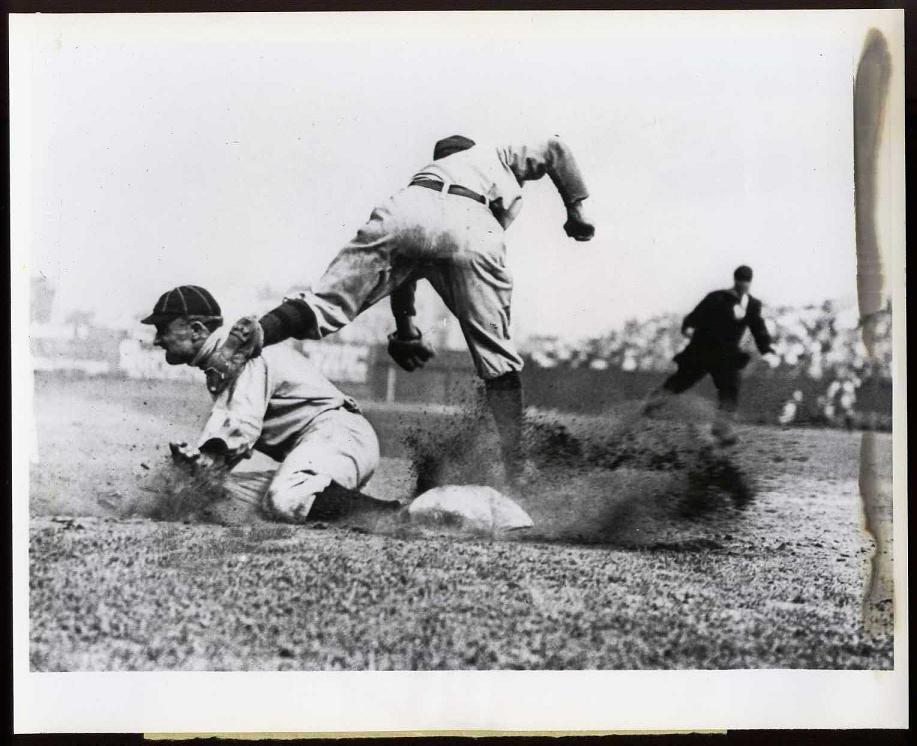
The problem with this high-tech photography when it’s applied to racing is that every vestige of speed disappears. What makes Ty Cobb sliding into third the greatest baseball photo ever isn’t that every grain of dirt he kicks up is frozen stock-still; it’s that some dirt is just a blur. The photo makes Cobb look like he’s exploding into third, and that’s because the picture was shot using relatively primitive equipment and a relatively slow shutter speed.
That doesn’t happen with contemporary racing photography. Unless you’re shooting dirt-track racing – and no one was – a fast camera with a fast lens shooting fast film is going to make a car racing on asphalt look like it’s standing still – because that’s what it’s supposed to do.
Problem is, cars standing still ain’t racin’. Unless you’re Danica Patrick.
No one ever understood that about racing cards. For a short time we had Maxx Racing Cards as a client. Maxx was located in Mooresville, N.C., a holler and a half from Charlotte and smack-dab in the middle of NASCAR country. Those boys knew racin’ with a capital apostrophe – so naturally, they wanted to do draft-pick cards.
We sat with them in the posh dining room of the Mooresville Country Club, complemented the proprietor on the genuine knotty-pine paneling they’d picked up at Lowe’s, drank sweet tea, and talked trading cards. Never did the Maxx boys acknowledge that one of the major failings of racing cards was they didn’t show racing.
It wasn’t just photography stringing up the Dukes of Mooresville. Thanks to NASCAR’s all-seeing eye, cards of crashes were out, and so were cards of the Busch brothers giving each other the finger. All Maxx had to work with were cards of cars standing still, cards of drivers wearing mirror shades, cards of crew members reading newspapers, and cards of trailers.
Companies like Maxx and Action Packed that did racing well could make something reasonably compelling out of that. It was the amateurs that brought racing cards’ shortcomings into focus.
A& S Racing Collectables (sic) made cards of Indy-car racing, a type of racing that’s better in every tangible way than NASCAR – faster, louder, more dramatic – yet still manages to be an inferior product. (That takes work, let me tell you.)
That inferiority carries over to the 1985-vintage C/DA-PPG set. It’s the Indy-car racing of racing-card sets, and this Derek Daly card represents the absolute nadir of racing carddom – a crummy, static picture of a mediocre driver (12th at Indy, but didn’t race at Michigan or Pocono, and was sitting at 39th in the Indy-car standings at the time these were printed), on flimsy cardstock festooned with homemade graphics and the letter “W” placed on the card front for no apparent reason.
If you’re looking for a reason why SkyBox, Action Packed, Pinnacle, Maxx, Traks, Pro Set, Press Pass, Finish Line, Upper Deck, Fleer, and Racing Champions made NASCAR cards, and none of them wanted in on Indy-car racing, here’s your reason. They saw this card.
Hard to drive with blood on your hands, eh, Derek?


Many columns ago we explained how Pro Set’s Young Indiana Jones set was not the victim of a whack print job. Au contraire, Eau Claire: Pro Set meant to do this. The cards are 3-D, and here’s the viewer put in every pack to make the cards look normal (or as normal as anything can look when viewed through red and blue cellophane).
I have a problem with the larger concept of 3-D, especially as it’s applied to movies (The Great Gatsby in 3-D? Really? What’s next? Wuthering Heights in 3-D? Finnegan’s Wake with flying pronouns? Macbeth 3-D?), but I’m semi-okay with the 3-D glasses-things. Still, what does it say about your set if you have to put a device in every pack to keep the product from looking defective?


Smaller card manufacturers in the Handful O’Landfill era lived from license to license. If the movie or comic book or TV series hit (Buffy The Vampire Slayer, Evil Ernie/Lady Death) the card company ate steak. If it didn’t (Pagemaster, Dinotopia) it ate hot dogs.
If you imagine smaller manufacturers playing The Game of Life, their path to wealth and happiness was the long one. The really long one. The one that went off the board and twice around the coffee table, down the stairs, over the dog, in and out of the hutch, and through the breakfast nook. If a couple of peg children fell out in the process, so be it. Life’s tough when you’re a small cardmaker in a plastic car.
It’s a 1930s M-G-M-musical approach to business, with the aspiring starlet crushing it in the high-school musical while a Hollywood producer just happens to be sitting in the audience, and it would have worked if these companies hadn’t had such a tin ear for licenses. Lime Rock went from Mad magazine cards to NBA cheerleader cards to muscle-car cards to draft-pick sets to Desert Storm cards to cards of Starlog magazine covers and Bozo the Clown. Little Sun careened from Major League Writers to high-school baseball all-stars to Wooden Award winners. Collect-A-Card bounced from Coca-Cola to Campbell’s Soup to Dinotopia. But no one was less skilled at riding winners than Kayo.
Kayo started with a demi-successful boxing-card set, and when that grubstake was overrun by Ringlords and others swiftly locked down the license for the Professional Spring Football League. When the PSFL turned out to be as substantial as a Miley Cyrus B-side, Kayo swooped in and picked up the license for the National Skateboard Association.
Yeah, I didn’t know it existed, either, but here’s your proof: A Chris Miller prototype card (and not the Chris Miller of the multiple concussions and unfulfilled NFL promise, though I can totally understand why someone with a history of head injuries would consider a pro-skateboarding career), replete with the claim that “Chris enjoys surfing and artsy stuff.”
(What? Surfing's not artsy?)


Okay, but the thing is Kayo was probably thrilled to get the National Skateboard Association license, because it probably had competition.
The Kayo Kidz were not on an island here. No no no no no no no no no. They undoubtedly had to beat back Little Sun and Lime Rock with their PSFL contract to bring home this puppy. And after they got it I'm sure they celebrated. Went and looked at artsy stuff or something.
Kayo had the best mascot in trading cards – a kangaroo, shown here riding a skateboard[1] – but having the best mascot in trading cards is like having the longest toenails in Major League Soccer. It’s a whole lot better to have something that makes money.
On the other hand, if you had a marginal property like Prancercise and wanted a trading-card set, it was always nice to have a number to call or a booth to visit at the licensing show and hear an eager voice say, “Prancercise cards? You bet!”

The call from reality could wait.


[1] Not that it had a lot of competition. Bazooka Joe doesn’t count. Neither does Lud Denny.

Friday, September 20, 2013

Extremely Dumb And Incredibly Stupid

As I wrap up my current job and prepare for a new challenge, it's time to clean up some odds and ends I've had laying around my office and environs.


When I was editing coin magazines in Iola – no, wait; let me back up and mention how I wound up editing coin magazines in Iola.

I had been working for an ad agency in Wausau, Wis., that one day decided, Baltimore Colts-style, to move 200 miles south to Milwaukee and not tell me. I came to work one day and there was a sign on the door reading, “Moved to Milwaukee. Sorry.” Moved to Milwaukee? Really? After I created “The Wausau Center Mall Polka”[1] just for them? That’s gratitude.
After the unemployment ran out I was like Alexander the Great, weeping because there were no more worlds to conquer, advertising-wise. I really wanted to work for Krause Publications in Iola, Wis., because KP was local and did magazines about baseball cards. So I pestered the heck out of the HR guy until I got an interview for an editorial-assistant position on World Coin News – not Baseball Cards magazine by any stretch, but the proverbial foot in the door.
During the interview, and sometime before he told me the starting salary was 14[2], the HR guy asked me, “Do you collect coins?”
“Of course,” I said. I didn’t tell him my coin collection consisted of a half-full penny folder and a Band-Aid box full of dinged-up silver dollars, worn-flat Liberty quarters, Canadian beaver-back nickels, and a couple of bus tokens worth a total of $17.50.
That was the clincher. I was officially on the staff of World Coin News, and not too many months later, when the editor received a higher calling, I was named editor of World Coin News.

It was a position of not insignificant prestige in the numismatic community, because it attracted weirdos like Mountain Dew attracts hornets.

My favorite was The Mighty Shane Vickers. I’m guessing that was his full name, like Neil Patrick Harris, because whenever he wrote he never called himself anything other than The Mighty Shane Vickers.
Anyway, The (as I was fond of calling him in those days) once wrote me and demanded that his face be put on a coin emblazoned with the legend “I AM THE MIGHTY SHANE VICKERS,” and the coin shown throughout the national nightly news broadcasts of ABC, CBS, and NBC.
I don’t know what he thought I could do about it, and I don’t remember what terrible calamity he promised if his request was not carried out. It may have been something like, “Grant my wish or I will star in a Wonderful Pistachios ad.”

Naturally, we turned over The Mighty Shane Vickers to the authorities, who later made him Secretary of the Interior under George W. Bush.

The point of this autobiographical rambling is that The Mighty Shane Vickers was the victim of bad timing. If he could have waited another 10 years and learned to hit left-handed he could have had his face on a coin, and he wouldn’t have had to enlist some schlubby $14,000-a-year man to make it happen. Pinnacle would have done it for him. He still wouldn’t have been any closer to Peter Jennings, though.


I haven’t been to the National Sports Collectors Convention in more than 15 years, but I’m guessing that a card company still sponsors the exhibitor badges.
I look at this one and see two things: a stable of great SkyBox brands driven into the ground by the phine pholks at Phleer in Philly, and Tom Goodwin.

I’m not sure what message is being sent by putting Tom Goodwin on my exhibitor’s badge. It either means I’m extremely good at being extremely fast, or that I’m a one-time hot prospect reduced to being a one-dimensional role player most skilled at riding the pine.
I’m going with the first explanation, though the second one is certainly in play.


There’s a genre of cards from the ‘30s that show pulpy art of pulpy subjects. The most famous of these sets, G-Men and Horrors of War, look like grade-school comic-book pictures of Chinese babies having their heads blown off, printed on the inside of a cereal box and cut out with scissors. If Topps put Lamb of God in charge of its non-sport division and hired Shane McGowan to do quality control, this is the outcome you’d expect.
The guess is that Dart Flipcards was striving for that look with its Vietnam War set, but made the mistake of opting for quality and restraint over death-metal bands and toothless drunkards. The white cardstock (not a good thing in this case) shows every detail of the overly sketchy artwork (not a good thing, volume two). The card copy is bilingual but Canadian-polite in both languages (not a good thing/pas une bonne chose). The overall look is distinctive but not good-distinctive. More like homemade-distinctive.
No one wants to open a pack of cards and see a crude rendition of a burning child running naked down a Vietnamese road, unless that’s what the subject matter demands. The Rape of Nanking was a brutal, despicable act that demanded a brutal, borderline-despicable card. Similarly, the crime-doesn't-pay message had to be hammered home in the '30s, because there was a growing body of evidence that crime paid a whole lot better than unemployment.
Dart opted to come down on the side of tact. The result isn't bad; it's merely wrong.

More from the going-away (you wish) files next time.


[1] Truly a fine piece of creative work, if I say so myself. Wausau was making a Great Leap Forward with the construction of a downtown mall, and the city had hired our advertising agency to do the creative. One day my boss walked into our spacious-yet-dingy office above the King’s Knight discotheque in west-central Wausau (or WesCen, as all the cool folks called it) and said, “We need a mall jingle.” I went home and with my guitar and keyboard created a paean to the revolutionary shopping experience that was the Wausau Center Mall, and set it to the tune of “The Laughing Polka.” (Don’t ask me why I knew “The Laughing Polka.” If you spent any time in central Wisconsin in the ‘70s and ‘80s, you knew polkas.) I can remember one of the verses went,  “Oh when I was a little boy so many years ago/I used to love my shopping, and shopping wasn’t slow/But now I have a place to go that’s just like way back when/I shop the Wausau Center Mall, where shopping’s fun again,” and was followed by a chorus of, “Oh ha ha ha ha ha ha ha ha ha ha ha ha ha ha ha ha ha ha ha ha ha ha ha ha ha” etc. (They didn’t call it “The Laughing Polka” for nothing.) With this piece of sterling songcraft in hand I went back to work, walked into my boss’ office, and said, “I’ve got it – the perfect jingle. It fits the demographic, it works in the slogan, and it’s catchy.” Then I played her the jingle. It probably took them a week after that to get everything packed up and moved to Milwaukee.


[2] Thousand dollars a year, not dollars an hour. That distinction tripped up my buddy Phil LaFranka, who wound up taking a pay cut to come to KP, but I always thought the HR guy was not entirely to blame in Phil’s case. There’s no way Phil could have driven into Iola, Wis., population 925, past the millpond and the JBJ Store and the abandoned pickle factory and say, “Yeah, there’s a place here that’s gonna pay me 14 dollars an hour to strip ads into shoppers.”

Wednesday, September 11, 2013

Derek Jeter And The Perversey Jersey

Ah, the remembrance of things past that I can’t show you, not that I would want to.
For instance, one semi-prospective client wanted us to promote their book, Arnold Palmer and the Golfin’ Dolphin. It was a legitimate book in that it had covers and pages and an assortment of nice words and illustrations after a fashion, and it ostensibly had Arnold Palmer’s permission, because him suing them was not the reason they went out of business. No, the reason they went out of business was that as a work of existentialist children’s fiction involving the world’s most highly evolved mammal and a golf legend, it stunk. It was the Watch The Throne of dolphin-golfer children’s-fiction mashups, and still it blew huge literature chunks.
As a sometime children’s author and songwriter, I understand the seductiveness of the golfin’/dolphin rhyme. It took the influence of an Indian holy man to keep Lennon and McCartney from going completely golfin’/dolphin crazy. One can only imagine the different path “Let It Be” would have trod had the two lads not restrained themselves. (Fortunately, I have no such restraint issues: “When I find myself in trouble golfin’/Arnold Palmer comes to me/He says, ‘Ignore the dolphin/It’s a par-three.’”)
I can’t show you the book, because my partner Dean and I found it in the course of cleaning out our offices, dropped it on the doorstep of the nearest elementary school, rang the doorbell, and ran. So I’m guessing it’s somewhere in the greater New London school system, where it’s probably celebrated as art.
Let us move from Arnold Palmer and the Golfin’ Dolphin to the leather mini-replica-jersey equivalent of Arnold Palmer and the Golfin’ Dolphin. I thought I knew everything that went down during the Handful O’Landfill era, card-wise; I even knew of the Classic Winnebagos set, though I pretended not to, and in fact went into the kitchen for a drink every time they entered the room. I especially thought I knew everything that a major manufacturer had ever thought of, including NBA Hoops folders and Donruss Red Zone football, the John Carter[1] of football CCGs. But I had never, ever heard of Topps Jersey Topps until I saw the press release.
You know you’re in for a spin in the dunk tank when you see the name: Topps Jersey Topps. It’s a palindrome. No, no, not a palindrome. It’s that thing where it sounds the same backwards and forwards. A pun – that’s it! A pun. No, it’s not a pun.
See what Topps Jersey Topps did? It made me screw up the Dead Parrot Sketch.
No other manufacturer felt compelled to work its name into a product this way. There was no SkyBox Basketball SkyBox set, no Pro Set Football Pro Set, no Fleer Baseball Fleer, though Fleer Flair came a little too close for comfort. Only Topps felt the second Topps was necessary, though pretty much by definition a jersey is, you know, a top.
As alluded to earlier, Topps Jersey Topps (I can’t get used to the name; it reminds me too much of Canadian postage stamps) is a set of miniature leather replica jerseys.
That word combination seems random, so let’s break it down.
The jerseys are miniature because you can’t J-hook a Mark McGwire uni in the notions aisle of a Kum ‘n’ Go.
They’re replicas (I’m saving the leather for later) because the MSRP on even a Sammy Sosa game-worn is liable to be out of the financial reach of the Kum ‘n’ Go night manager who is the demographic target of this particular set.
They’re jerseys because stirrup socks aren’t sexy enough, at least not on Cal Ripken Jr.
And they’re leather because … because. Because cloth is too downscale. Because Topps confused a set of baseball cards with a Bentley Flying Spur.
Well, let’s go to the press release. Maybe it has some guidance.
Here we are: “Each Jersey is designed to simulate the feel of cloth and crafted from genuine flexible leather, rather than a hard, molded plastic.”
That’s it. Make the jerseys out of leather to simulate cloth because it’s easier to make leather feel like cloth as opposed to plastic.
While this happens to be true, it’s also meaningless. Of course leather is a more cloth-like material than plastic. It’s also a more cloth-like material than lead or molybdenum. And let’s deal with the elephant in the room right now: the most cloth-like material of all is cloth.
Later in the press release we find, “Each one is also painted to scaled specifications of the original, authentic jersey and includes all team logos and player names.”
Again we say: that’s it. Paint the leather jersey instead of screen-printing a cloth one – or better yet, making it out of wool and shrinking it like a Tom and Jerry zoot suit.
As for the raison d’etre of this particular product, Topps must have suspected there would be questions, because it came prepared with an answer: “Fans and collectors now have the perfect item to attain autographs.”
Not even dealing with the fact that it’s way easier to obtain an autograph than attain one, if I were an official league baseball or an 8x10 glossy, I would be royally pissed right now. In fact, I’d be hiring a game-used home plate to ram Topps Jersey Topps’ teeth down its palindromic throat.
The best thing about Topps Jersey Topps is not the price, though we all can agree that $9.99 is a small price to pay for painted leather meant to feel like cloth, the perfect item to attain autographs. Nope, the best thing about Topps Jersey Topps is there are only six of them in the set (I can’t believe you want to know this, but anyway: McGwire, Sosa, Ripken, Chipper Jones, Ken Griffey Jr., and Derek Jeter).
While I’m sure there are other HOL-era collectibles from the major manufacturers that I’ve missed, I don’t know whether anything else will offer the combination of ham-handed concept and bone-headed execution to match Topps Jersey Topps.
Though I’m guessing the golfin’ dolphin folks would be up to the challenge.


[1] Or Ishtar or The Postman or Waterworld or Heaven’s Gate or the last decade-and-a-half of Adam Sandler movies.

Thursday, August 29, 2013

Who Puts The 'Cyan' In 'Cyanide'?


I loathe sports art. I am not an art-loather by nature; I have a great deal of loatheable art on display in my home, and I loathe none of it – even the stuff my kids didn’t create. However, my kids know better than to create sports art.
And I ought to be clear here: I do not loathe all sports art. I do not loathe Robert Riggs’ depiction of the Max Baer-Primo Carnera fight. I'm also good with Aztec-ball-game art. All other sports art I loathe.
I say that counting at least one sports artist among my friends. Dan does fantastic sports art. If you’re looking for sports art, his is the sports art to have. I have a picture of Bob Wills he painted, and another that served as the cover for a rock-‘n’-roll book I wrote, but I have none of his sports art. Why? Because I loathe sports art.
I loathed my old boss, and naturally, he had sports art in his office. And not only did he have sports art in his office, but he had large sports art. Of golf. Done by LeRoy Neiman.
Of all the loathsome subjects painted by loathsome artists in a loathsome genre owned by a loathsome individual. It would be like Miley Cyrus covering the Plasmatics in an exclusive pressing for Alex Rodriguez.
There is nothing even remotely artistic about Neiman's quasi-impressionistic depictions of the gallery at the Masters, rendered with trowel-like delicacy in the same colors used to create fishing baits.
After my boss graced his wall with this insult to Monet, Picasso, Seurat, and God, he asked me what I thought. “I hate it,” I told him.
“But it’s LeRoy Neiman,” he replied.
“I hate LeRoy Neiman,” I answered.
He gave me the same fish-mouthed look he gave me when I told him I don’t drink coffee and don’t really play golf. And then he put me on double-secret probation for another year and a half.
The main reason I hate sports art is it lets hacks like Neiman thrive by exploiting the exploits of genuine artists – golfing artists, boxing artists, baseball artists, Olympian artists. And also Joe Namath.
At this point, I have to admit I was guilty of stretching the truth when I said the only semi-modern sports art I don’t hate is Riggs’ depiction of Baer-Carnera. I do not hate the 1953 Topps Baseball set because the artist was anonymous (at the time, anyway; the artist, Gerry Dvorak, later became famous for his work, and rightly so). It was an art set because it was more convenient, and likely cheaper, to hire an advertising artist to paint 280 portraits of baseball players than it was to take that many color pictures. It was the antithesis of art for art's sake; no shame in that.
For the same reason I might be convinced that the 1976 Topps Traded card of Tom House with the blob of cranberry mold where his hat should be is also sports art. Maybe. I don’t loathe it, but I’m guessing House disagrees.)
So you can guess my reaction when I was cleaning out a file drawer and a small yellow envelope fell out. Nope; sorry. It wasn’t that kind of small yellow envelope.
Perhaps it would help if I told you that inside the envelope was a series of 1953 Topps ripoff art cards I had never seen before.
Yep. That’s pretty much what I said. And I said it double after I noticed the web address on the back: GoodSportsArt.com.
As a disinformative URL, GoodSportsArt.com ranks only slightly behind NiceSerialKiller.com. It’s also interesting that the company behind GSA, Bill Goff Inc., felt it necessary to describe its sports art as “good” for site visitors who may not be acquainted with sports art, or who might have stumbled upon BadSportsArt.com and seen what appears to be the same thing.
Now, let me drop the snark for a minute and say that the guys who did these portraits, Bill Purdom and James Fiorentino, are 150,000 times the artist I am. In fact, Topps commissioned Purdom and Fiorentino to do these paintings as part of its proprietary ’53 ripoff set, and Topps don’t hire junk as far as sports artists are concerned.
Still, a set of cards done by semi-famous contemporary sports artists pretending to be advertising artists doing cards of modern players in an old-fashioned way simply doesn’t work. It could work in 1953 because there was HD nothing. As a baseball fan, your mental image of a ballplayer was based on grainy black-and-white newspaper photos, snowy black-and-white TV images, the occasional color spread in Sport, and baseball cards. You weren’t exposed and exposed to a player’s face until you felt you could trace every blackhead and tobacco stain.
The reference point is just too fixed for modern players. In 1953 you could look at a painted portrait of Satchel Paige and say,“Yeah; that’s him, I guess.” In this mini-set, you look at the dark, pinched face of Nomar Garciaparra and say,“Man, his ears stick out way too much, and that thing on his nose doesn’t belong, and what’s with the enormous ‘B’ on the cap? Is that like the modern-day scarlet letter?” And so forth.
The typeface is also wrong, which irks me. When we did replica trading cards at Baseball Cards magazine, we basically had a rock and stick, and we still nailed the type styles of everything from 1970 Topps Baseball to Parkhurst hockey. The type faces on these aren’t even close. That’s just plain lazy, and inexcusable.
Finally, it comes down to this: I’m not sure the world needs a set of cards based on a different set of cards based on a different set of cards that consisted not of photographs but of paintings. It’s sports art of sports art of sports art, and have I told you lately how I feel about sports art? I guess I have.
The good news is that these cards, and the contemporary ’53 Topps ripoff set that spawned them, are essentially worthless. They made no one forget, or remember, the originals.
I often acknowledge that this or that collectible is worthless. I don’t often root for something to be worthless. But in the case of sports art, I’m always willing to make an exception. 

Monday, August 19, 2013

Wooden It Be Nice


I‘ve about had it with list stories. You know: “The 2,500 Most Despicable Reality Shows” or “Five People That Became President” or “Three Signs That It’s Time To Breathe.” Buzzfeed, the Death Star of list stories, calls them “listicles,” and even has a listicle clock showing a different Buzzfeed list every second. Like that’s a good thing.
So instead of doing a story on “The Five Most Annoying People of the Handful O’Landfill Era”[1] I thought I would do a story on one thing, and one thing only: The John Wooden Award Set.
You don’t have to be a follower of anything besides your own nose to know that John Wooden was about as close to a perfect human being as was ever created. He was an athlete, a teacher, a father, a mentor, a friend, a philosopher, a leader, an inspiration, and perhaps the best coach of anything ever. He was religious without being pious, a salesman without being a shill, and moral without being a prude. He was married to the same woman for more than 50 years, and that was about the least remarkable thing about him. As a leader in a segment of a sport where fair play is far less important than an athlete’s chosen brand of jockstrap, John Wooden stands alone.
Needless to say, John Wooden did not adopt a significant position in the sports-collectibles industry.
However, John Wooden did lend his name to at least one award – the award given annually to the nation’s best college-basketball player.
There is a disconnect here, in that John Wooden was not a great college-basketball player in the way that Pete Maravich or Elvin Hayes or Larry Bird was a great basketball player. Coach Wooden was a three-time All-American to be sure, but at a time where being a three-time All-American in basketball was roughly akin to being a three-time All-American in water polo today – a sterling achievement, but not something that would make you say he was one of the best ever.
Handing out a John Wooden Award to the nation’s top college-basketball coach -- now that would be a different story.[2]
Still, John Heisman was not a great college-football player, nor was Golden Spikes a great amateur baseball player.[3] So there is precedent for naming awards given to players after people who weren’t great players – a fact that should give us all hope. (I personally am dying to present the John B. "Sparky" Seals Award to the nation’s best C-level peewee hockey player.)
So the John Wooden Award it is, and the John Wooden Award it has been since 1977, meaning there is ample material for a John Wooden Award card set, even if you happen to be living in 1992 and can’t get “Life Is A Highway” out of your head.
So let’s imagine it is 1992, and “Life Is A Highway” just got done playing and now it’s “To Be With You,” to be shortly followed by “2 Legit 2 Quit” and “Achy Breaky Heart.” There have been 15 winners of the John Wooden Award, and you have all the paperwork in place to make a John Wooden Award card set. What do you do?
If you’re Ken Goldin, you tear up the paperwork and make a 100-card draft-pick set, cram it full of Eric Lindros, Russell Maryland, Brien Taylor, and Larry Johnson autographs, and sell it on QVC.
If you’re Mike Cramer, you make a 500-card set with one card of this year’s winner die-cut 499 different ways, and a checklist.
If you’re Richard McWilliam, you borrow Ken Goldin and Mike Cramer’s cards, color-correct the heck out of them, put Ken Griffey Jr.’s head on Danny Ainge’s body, and forget to send the royalty check.
If you’re David Greenhill, you sell everyone else’s cards at a loss.
And if you’re my brother, you keep demanding that they put Carlton Fisk cards in the set, just so you can pull them out and destroy them.
Fortunately, Little Sun was at the helm, and no one knew more than Little Sun, albeit inadvertently, about making a trading-card set without possibility of financial gain. In this case, Little Sun created a simple set, with one card for each award-winner through Larry Johnson, four cards of Coach Wooden (who deserves a multiple-card salute more than anyone on the planet), a card of the trophy, a card devoted to the president of the Los Angeles Athletic Club, a card devoted to the club (told you this was done without thought of financial gain), and a numbered Certification of Limited Edition[4]. It put everything in a wallet-sized case, with a page for each card. You page through the cards, admire the photos, read about Coach Wooden, and when you’re done, simply set it aside.
There’s nothing flashy about the cards, just a nice photo in an attractive border with player-card backs that state the player's name, position, and college. Say what you want about Little Sun, but they refuse to waste your time, and printer's ink, with triviata about Darrell Griffith. You come away from your few minutes spent with the set understanding all things needful about the award, its recipients, and Coach Wooden.
Sure, there were better sets made during the HOL era. There were more important sets. There were more valuable sets. But there were also many more trashier sets, and contract-obligation sets, and misrepresented sets, and bizarro sets, and sets that sold collectors a big ol’ bill of cardboard goods.
Not this set. The John Wooden Award set delights through its Hoosier simplicity, its adherence to its purpose, and its celebration of what is most important.
I’m guessing Coach Wooden approved.


[1] Ken Goldin, Mike Cramer, Richard McWilliam, David Greenhill, and my brother. Top that, Buzzfeed.
[2] Actually, there is a John Wooden Legends of Coaching Award that no one knows about except you and me. And Mike Krzyzewski.
[3] And Tewaaraton didn’t even play lacrosse at all; go figure.
[4] “Limited” not really being necessary in this case, seeing as Little Sun Made 21,000 sets.